
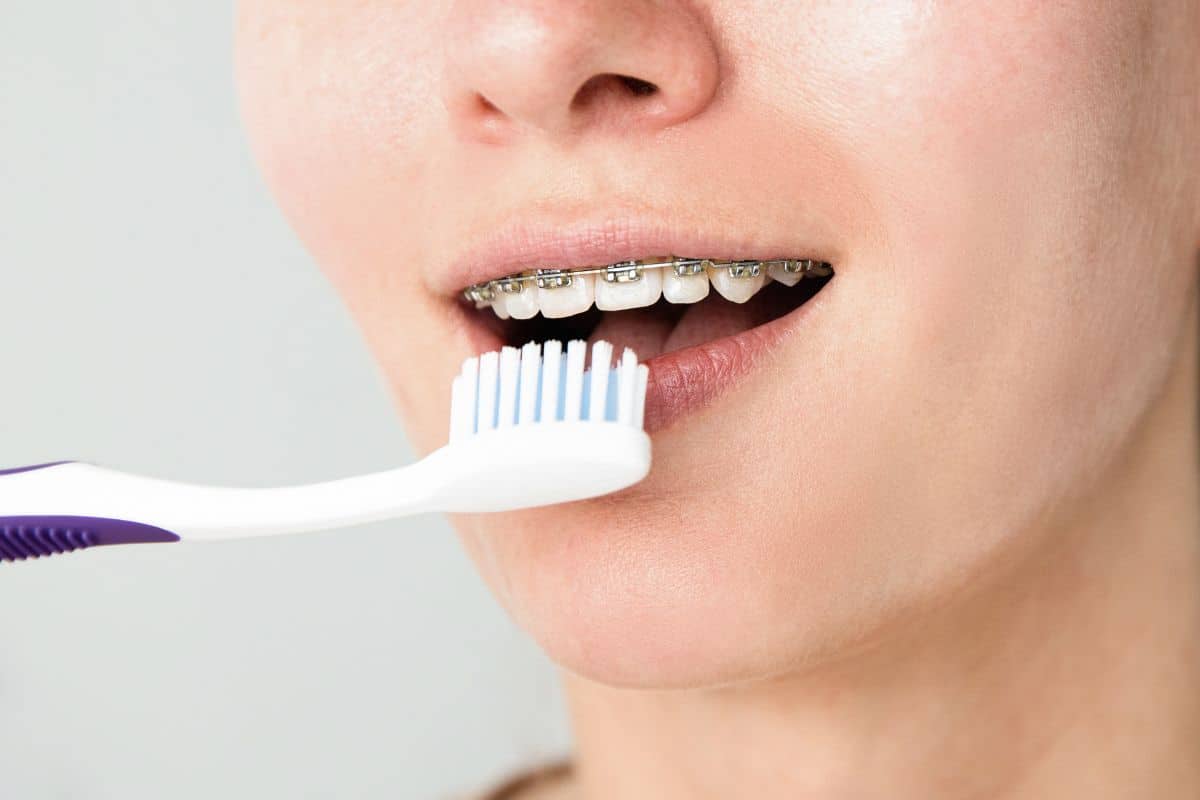
Maintaining Oral Hygiene with Braces: Tips from Orthodontist
July 18, 2024
Getting braces is a significant commitment — in time, money, and daily effort. Most patients focus on the end result: straighter teeth, a corrected bite, a more confident smile. But what’s less talked about, and far more important in the short term, is what happens to your teeth during treatment if you’re not caring for them properly.
Braces create dozens of new surfaces where plaque, food debris, and bacteria can accumulate. Without the right hygiene routine, patients can finish treatment with straight teeth that are stained, weakened, or riddled with cavities — essentially trading one problem for another. That’s an outcome no one wants, and one that’s entirely preventable.
At First Hill Dental Center – Dr. Singh, DMD works with patients throughout their orthodontic journey to ensure their teeth stay as healthy as they are straight. Here’s a thorough look at what good oral hygiene with braces actually requires — and why it matters more than most people realize.
Why Braces Make Oral Hygiene More Challenging
Before braces, brushing and flossing are relatively straightforward. After brackets and wires are placed, the geometry of your mouth changes completely. Every bracket is a ledge where plaque can settle. Every wire creates a barrier that standard flossing can’t easily pass through. The spaces between the wire and the tooth surface, as well as around the edges of each bracket, are prime locations for bacterial buildup.
Left untreated, this buildup leads to:
- Tooth decay — cavities that form at the bracket margins or between teeth
- Decalcification — white or chalky spots on enamel caused by prolonged acid exposure; these are permanent and appear the moment braces come off
- Gingivitis and gum disease — inflammation that can become painful and, in serious cases, affect the underlying bone
- Prolonged treatment — when cavities require restorative work mid-treatment, orthodontic timelines get disrupted
None of these complications are inevitable. They are, however, predictable outcomes of inadequate hygiene. Understanding that braces require a fundamentally different approach — not just “brush more” — is the first step.
Brushing with Braces: Technique Is Everything
How Often to Brush
The standard recommendation of twice daily is not sufficient when you’re wearing braces. You should brush after every meal and snack — ideally within 30 minutes of eating. Food trapped around brackets and wires ferments quickly, producing acids that attack enamel. If you can’t brush immediately, rinsing thoroughly with water helps reduce the damage until you can.
The Right Technique
Begin by rinsing your mouth with water to dislodge loose food particles. Then, angle your toothbrush at approximately 45 degrees toward the gum line and brush gently in small circular motions. Clean above and below the wire separately — the wire divides each tooth into zones that require individual attention.
Pay particular attention to:
- The area between the bracket and the gum line
- The sides of each bracket
- The chewing surfaces of your back teeth
- The inner surfaces of all teeth (the tongue-side surfaces are commonly neglected)
Each brushing session should take a minimum of two minutes, and realistically closer to three when braces are involved.
Choosing the Right Toothbrush
A soft-bristled manual toothbrush works well if you use proper technique. An electric toothbrush — particularly an oscillating-rotating model — can be more effective at removing plaque from around brackets and is worth considering, especially for younger patients or those who struggle with manual dexterity.
Interdental brushes (sometimes called proxy brushes or interproximal brushes) are small, cone-shaped brushes that slip under the archwire and clean the areas around brackets that a regular toothbrush can’t reach. Most orthodontists consider these an essential addition to the routine, not an optional accessory.
Replace your toothbrush or brush head more frequently than usual — roughly every six to eight weeks — because the wires accelerate bristle wear.
Fluoride Toothpaste
Always use a fluoride toothpaste. Fluoride strengthens enamel and helps counteract the increased acid exposure that comes with having food and plaque trapped around brackets. Some patients at higher risk for decay may benefit from a prescription-strength fluoride product; ask Dr. Singh whether this applies to you.
Flossing with Braces: It’s Non-Negotiable
Flossing with braces is inconvenient. It’s also absolutely necessary.
Brushing — even excellent brushing — cannot remove plaque from the contact points between teeth. Only flossing (or an equivalent method) reaches those interproximal spaces. Skipping it, even for a few days at a time, allows plaque to mineralize into tartar that can only be removed by a professional.
Flossing Methods
Floss threaders are small, flexible plastic needles that allow you to pass regular floss under the archwire so you can guide it between teeth. They’re inexpensive and effective, though the process takes longer than conventional flossing. Thread the floss, guide it between each pair of teeth, move it gently up and down along the tooth surface, and repeat for each space. It can take 10–15 minutes to floss thoroughly with braces — that’s normal.
Orthodontic floss picks have a stiff end that can thread under wires without a separate threader, which many patients find easier to manage.
Water flossers (such as a Waterpik) are a popular and effective complement to string floss. The pressurized water stream removes food debris and reduces gingival inflammation, making it particularly useful for patients who find manual flossing cumbersome. While a water flosser shouldn’t fully replace string floss, it can make a meaningful difference in gum health and is generally well-tolerated.
Aim to floss at least once per day, ideally before bed, so that your mouth is clean during the overnight hours when bacterial activity is naturally higher.
Mouthwash: An Underused Tool
Rinsing with a fluoride-based or antimicrobial mouthwash adds an additional layer of protection that brushing and flossing alone don’t provide. An antiseptic rinse helps reduce the bacterial population in the mouth, while a fluoride rinse supports enamel remineralization.
Mouthwash is particularly useful right before bed. Rinse for the full recommended time (typically 30–60 seconds), and avoid eating or drinking afterward.
If you notice persistent gum tenderness or swelling, a rinse with warm salt water can reduce inflammation in the short term — though ongoing gum problems should always be brought to the attention of your dental provider.
Diet Adjustments That Protect Your Braces and Your Teeth
The foods you eat directly affect both the integrity of your appliances and the health of your teeth. Certain foods are problematic not because of orthodontic rules, but because they genuinely increase the risk of bracket damage, tooth decay, and hygiene complications.
Avoid or significantly limit:
- Hard foods — raw carrots, whole apples, hard candies, ice — these can crack brackets or bend wires
- Sticky foods — caramel, gummy candies, chewy granola bars — these adhere to brackets and are very difficult to remove, feeding cavity-causing bacteria
- Sugary drinks — sodas, sports drinks, sweetened juices — liquid sugar bathes all tooth surfaces continuously
- Highly acidic beverages — citrus juices, vinegar-based drinks, sparkling water — weaken enamel over time
Better choices during treatment:
- Soft fruits cut into small pieces
- Cooked vegetables
- Dairy products, which provide calcium and phosphate that support enamel
- Plain water as the primary beverage — it rinses the mouth naturally and doesn’t contribute to decay
These aren’t restrictions imposed arbitrarily. They reflect the reality that sugar and acid combined with the retention effects of braces create ideal conditions for rapid tooth decay.
Keeping Up with Professional Cleanings
One of the most common misconceptions patients have during orthodontic treatment is that frequent orthodontic check-up visits reduce the need for routine dental cleanings. They don’t.
Your orthodontist monitors tooth movement and appliance performance. Your general dentist and hygienist are responsible for monitoring gum health, catching early cavities, and performing professional cleaning that removes tartar from places no toothbrush can reach.
During orthodontic treatment, dental cleanings every three to four months — rather than the standard six — are often recommended. This more frequent schedule reflects the increased hygiene challenge that braces create. If you’re a patient at First Hill Dental Center, Dr. Singh can coordinate your care schedule to ensure that both your orthodontic progress and your overall dental health are being properly monitored.
Signs That Something Needs Attention
Knowing when to reach out between scheduled appointments matters. Contact your dental provider if you notice:
- White or chalky spots appearing on your teeth — these are early signs of decalcification
- Gum bleeding that persists beyond a few days of improved brushing
- Persistent soreness, swelling, or redness in the gums
- A bracket that has come loose or a wire that is poking and causing irritation
- Any noticeable change in how your bite feels
Catching these issues early almost always means a simpler, less costly solution.
FAQ
Q: How do I know if I’m brushing effectively with braces?
A plaque-disclosing tablet or rinse (available at most pharmacies) temporarily stains areas where plaque remains after brushing. It’s a practical, low-cost way to identify the spots you’re consistently missing so you can adjust your technique.
Q: Is a water flosser a replacement for string floss?
A water flosser is an excellent complement, but most dental professionals still recommend using string floss as well. The two methods clean somewhat differently — string floss physically scrapes the tooth surface, while a water flosser flushes debris from between teeth and below the gum line. Used together, they provide more complete coverage.
Q: My gums bleed when I brush around my braces. Is that normal?
Some mild bleeding when you first improve your brushing routine can occur as gum tissue that was previously inflamed begins to heal. However, persistent bleeding over more than a week or two of consistent brushing typically indicates gingivitis that warrants professional evaluation. Don’t stop brushing — brush more gently and more thoroughly, and follow up with your dental provider.
Q: Are there permanent stains from braces?
The brackets themselves don’t stain teeth directly. However, white spots — called decalcification or demineralization — can appear on enamel if plaque is allowed to remain on the tooth surface for extended periods. These spots are permanent and become visible when brackets are removed. They are preventable with consistent hygiene, but they cannot be reversed once they form without cosmetic dental treatment.
Q: How long does it take to properly clean my teeth with braces each day?
A realistic estimate is 5–10 minutes for thorough brushing with an interdental brush, plus 10–15 minutes for careful flossing. It’s more time than most people expect, but it’s a temporary investment during treatment. The alternative — restorative dental work for cavities after braces come off — takes considerably longer and costs considerably more.