
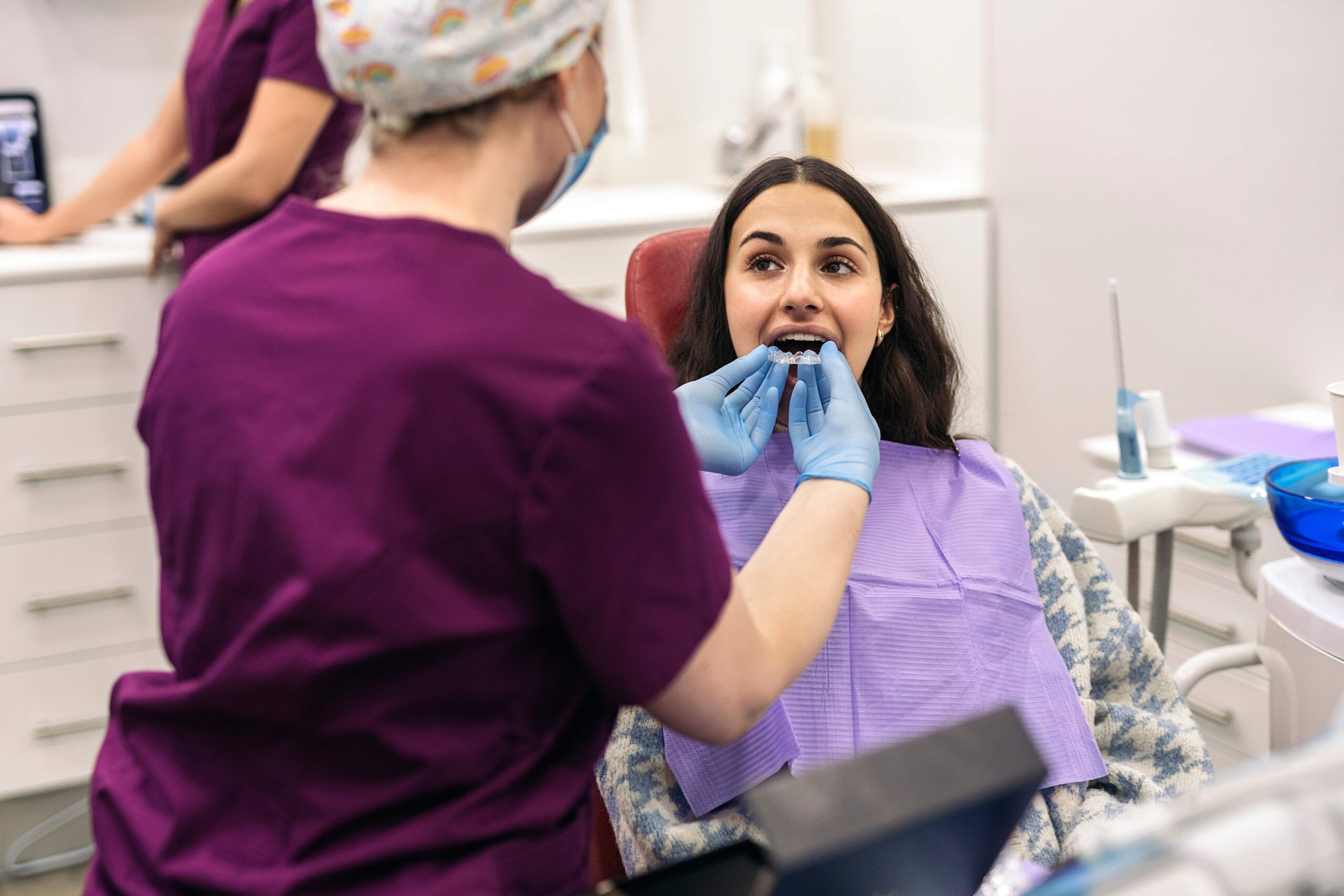
Orthodontic Emergencies Guide: Broken Bracket, Poking Wire, Lost Aligner
September 28, 2026
An orthodontic emergency is an unexpected problem with braces, aligners, or another appliance that requires timely advice or treatment. Common examples include a loose bracket, a sharp wire, or a lost aligner. Most problems are uncomfortable rather than life-threatening, but certain injuries require immediate medical attention.
Orthodontic appliances apply controlled forces to move teeth. A damaged bracket or displaced wire may interfere with treatment and cause irritation to the cheeks, lips, or tongue. Contact your orthodontist when a problem develops, even if the discomfort is mild. Your provider can determine whether you need an immediate appointment or can wait until the next scheduled visit.
When Should You Seek Immediate Emergency Care?
Seek emergency care for difficulty breathing, uncontrolled bleeding, major facial trauma, or a suspected broken jaw. Severe swelling with fever or serious injury to a permanent tooth also requires prompt professional assessment.
A broken bracket or poking wire usually requires orthodontic guidance rather than an emergency department visit. The urgency changes when an appliance causes significant injury or a component is swallowed or inhaled.
Call emergency services or go to the nearest emergency department if you experience:
-
Difficulty breathing or swallowing.
-
Heavy or uncontrolled bleeding.
-
Major facial trauma or suspected jaw fracture.
-
A permanent tooth that has been knocked out or severely displaced.
For a less severe orthodontic problem, contact your dental office and explain the symptoms. Do not attempt a complicated repair at home.
What Should You Do If a Bracket Breaks?
If a bracket breaks, avoid pulling it off, protect irritated tissue with orthodontic wax, and notify your orthodontist promptly. A loose bracket may remain attached to the archwire and require professional repair.
A bracket is the small attachment bonded to a tooth. It holds the archwire, which delivers force during fixed-braces treatment. A bracket can loosen because of hard foods, trauma, or pressure on the appliance.
How can you manage a loose bracket at home?
-
Check the bracket in a well-lit mirror.
-
If it remains attached to the wire, avoid moving it unnecessarily.
-
Apply a small amount of orthodontic wax over an irritating surface.
-
Avoid hard or sticky foods until the problem is assessed.
-
Contact your orthodontist and follow the instructions provided.
Do not attempt to rebond the bracket using household adhesives. A professional must evaluate the attachment and determine whether it needs repositioning or replacement.
How Can You Manage a Poking Orthodontic Wire?
Cover a sharp wire with orthodontic wax or gently reposition it only if your orthodontist has advised that it is safe. Contact the office if the wire remains painful, cannot be moved, or is embedded in tissue.
A protruding archwire can rub against the inner cheek, lips, or tongue. The irritation may become more noticeable during eating or speaking.
You can take these temporary measures:
-
Rinse gently with warm salt water to help soothe irritated tissue.
-
Place orthodontic wax over the sharp end.
-
Avoid repeatedly touching or bending the wire.
-
Contact your orthodontist for specific instructions.
Do not pull out a wire that is stuck in the cheek or attempt a repair that could worsen the injury. The Indian Dental Association advises immediate dental assessment when a wire becomes embedded in the cheek.
If the wire has moved significantly, your orthodontist may recommend an earlier appointment. The appropriate response depends on its position, the level of discomfort, and whether the appliance remains functional.
What Should You Do If You Lose an Aligner?
Contact your orthodontist after losing an aligner and do not automatically advance to the next tray without professional instructions. Your clinician may advise a previous aligner, a replacement, or another treatment adjustment.
Clear aligners are designed to be worn in a prescribed sequence. Each tray is manufactured to fit a specific stage of tooth movement. Skipping a tray can affect the planned progression of treatment.
How should you manage a missing or damaged tray?
-
Contact your orthodontist as soon as possible.
-
Explain which aligner was lost and when it happened.
-
Keep any previous aligner if you still have it.
-
Ask whether the previous tray can be worn temporarily.
-
Follow the clinician’s advice about replacement or continuation.
A previous aligner may be appropriate in some situations, but it should not be used as a universal solution. Your orthodontist must confirm whether it fits comfortably and is suitable for your treatment stage.
Do not wear a cracked, sharp, or severely distorted aligner. A damaged tray may irritate oral tissues or fail to fit correctly.
How Quickly Should You Contact an Orthodontist?
Contact your orthodontist promptly after a broken bracket, poking wire, or lost aligner, even when the problem does not cause severe pain. Timely advice helps determine whether an additional visit is necessary.
The required response depends on the type of issue:
|
Problem |
Recommended response |
|---|---|
|
Loose bracket |
Notify the orthodontist and arrange repair according to instructions. |
|
Poking wire |
Use temporary protection and request professional guidance. |
|
Lost aligner |
Contact the orthodontist before changing trays. |
|
Severe facial injury |
Seek emergency medical care. |
These categories are general guidance, not a substitute for individual clinical assessment. Your orthodontist may recommend a same-day visit, an earlier appointment, or home comfort measures until the next available opening.
How Can You Prevent Orthodontic Emergencies During Treatment?
You can reduce common orthodontic problems by following appliance-care instructions, avoiding damaging foods, and using a mouthguard during sports. Regular professional appointments also help identify treatment issues.
For patients wearing braces, avoid hard and sticky foods, including ice, hard candy, and caramel. Cut firm foods such as apples and carrots into smaller pieces instead of biting directly with the front teeth.
Patients using removable aligners should store them in a protective case when they are not being worn. Avoid leaving trays in hot environments because heat can distort their shape.
Sports participants should discuss an appropriate mouthguard with their orthodontist. A suitable appliance can help protect teeth and braces during activities involving possible facial impact.
Where Can You Get Orthodontic Treatment in Seattle?
A dental consultation can help determine whether orthodontic treatment is appropriate and how to address appliance-related concerns. The recommended next step depends on your current appliance, symptoms, and treatment plan.
If you are looking for orthodontic treatment in Seattle, First Hill Dental Center – Dr. Singh DMD provides information about its orthodontic treatment services on the practice website. Visit our clinic to get guidance and contact the practice for guidance about your individual needs.
Patients searching for an orthodontist in Seattle should discuss their treatment objectives, appliance type, appointment process, and emergency communication options directly with the dental provider.
What Should You Remember About Orthodontic Emergencies?
The safest response is to protect the irritated area, avoid unapproved repairs, and contact your orthodontist for instructions. Seek emergency care when symptoms involve serious injury, breathing difficulty, or uncontrolled bleeding.
A broken bracket, poking wire, and lost aligner each require a different response. Professional advice helps protect oral tissues and determine whether treatment adjustments are needed.
FAQs
What should I do if my braces bracket breaks?
Protect the irritating area with orthodontic wax, avoid pulling the bracket off, and contact your orthodontist for repair instructions.
Is a poking orthodontic wire an emergency?
A poking wire generally requires prompt orthodontic guidance, while an embedded wire or serious injury requires immediate professional assessment.
What happens if I lose my clear aligner?
Contact your orthodontist before switching to another tray because your clinician must determine the appropriate next step.
Can I fix a broken bracket at home?
You should not rebond a broken bracket at home; use temporary wax for irritation and follow your orthodontist’s repair instructions.
When should I go to the emergency room for an orthodontic problem?
Go to emergency care for breathing difficulty, uncontrolled bleeding, major facial trauma, or a suspected jaw fracture.