
How to Use an iTero Scanner for Crown Treatment
August 17, 2026
If you need a dental crown, you may wonder how to use an iTero scanner for crown treatment and whether a digital scan can replace the traditional dental impression. At First Hill Dental Center – Dr. Singh DMD in Seattle, iTero Scanner Technology provides a digital way to capture detailed information about your teeth and create a three-dimensional model for treatment planning.
Instead of using impression materials, an intraoral scanner captures the shape of the teeth and mouth digitally. First Hill Dental Center explains that its iTero scanner can create a digital model in as little as 60 seconds, giving the dental team a detailed view that can support restorative treatment planning.
For patients considering a crown, the important point is simple: the scanner is not the crown itself. It is a digital information-gathering tool that helps the dentist and dental laboratory understand the prepared tooth and surrounding structures when planning the restoration.
What Is an iTero Scanner Used for During Crown Treatment?
An iTero scanner is an intraoral scanning device used to capture digital impressions of the mouth. The resulting 3D model can be used as part of restorative dentistry, including crown treatment.
First Hill Dental Center uses iTero technology to create digital models of patients’ teeth and monitor changes in tooth wear, movement, and gingiva over time. The practice also identifies crowns and restorations as situations where digital scanning can be useful.
For a crown, the scan can help document:
- The shape and position of the prepared tooth
- Neighboring teeth
- The opposing teeth
- The patient’s bite relationship
- The surrounding oral structures relevant to the restoration
- Digital information needed for restorative treatment planning
The exact scanning and restoration workflow depends on the tooth, type of crown, clinical situation, and laboratory or restorative system being used.
How Does an iTero Scan Work for a Crown?
1. The dentist evaluates the tooth
Before scanning, the dentist determines whether a crown is appropriate. A crown may be considered when a tooth requires substantial restoration or protection.
First Hill Dental Center provides crowns as part of its long-term dental care approach and explains that restorative options are selected according to the condition and needs of the individual tooth.
This evaluation matters because an iTero scan does not determine whether you need a crown. The dentist’s examination and treatment planning come first.
2. The tooth is prepared when necessary
If a crown has been recommended, the tooth may need to be prepared so the final restoration can fit over it properly.
The preparation creates the shape needed for the planned crown. Once the tooth is ready to be digitally recorded, the scanner can capture the prepared area and surrounding teeth.
3. The iTero scanner captures the teeth
The dentist or dental professional guides the scanner inside the patient’s mouth to capture the teeth digitally.
Unlike conventional impressions, there is no need to place impression material over the teeth. First Hill Dental Center describes its iTero process as a way to obtain detailed measurements and create a digital model without powders or impression materials.
The scan is displayed as a 3D model, allowing the dental team to review the captured information.
4. The bite and surrounding teeth are recorded
A crown needs to function with the rest of your mouth, not simply cover one tooth.
For that reason, restorative digital workflows can include scanning the prepared arch, opposing arch, and bite relationship. The iTero manufacturer’s crown workflow describes these records as part of the digital process for restorative cases.
This information helps provide the laboratory or restorative workflow with a more complete representation of the patient’s mouth.
5. The digital model supports crown planning
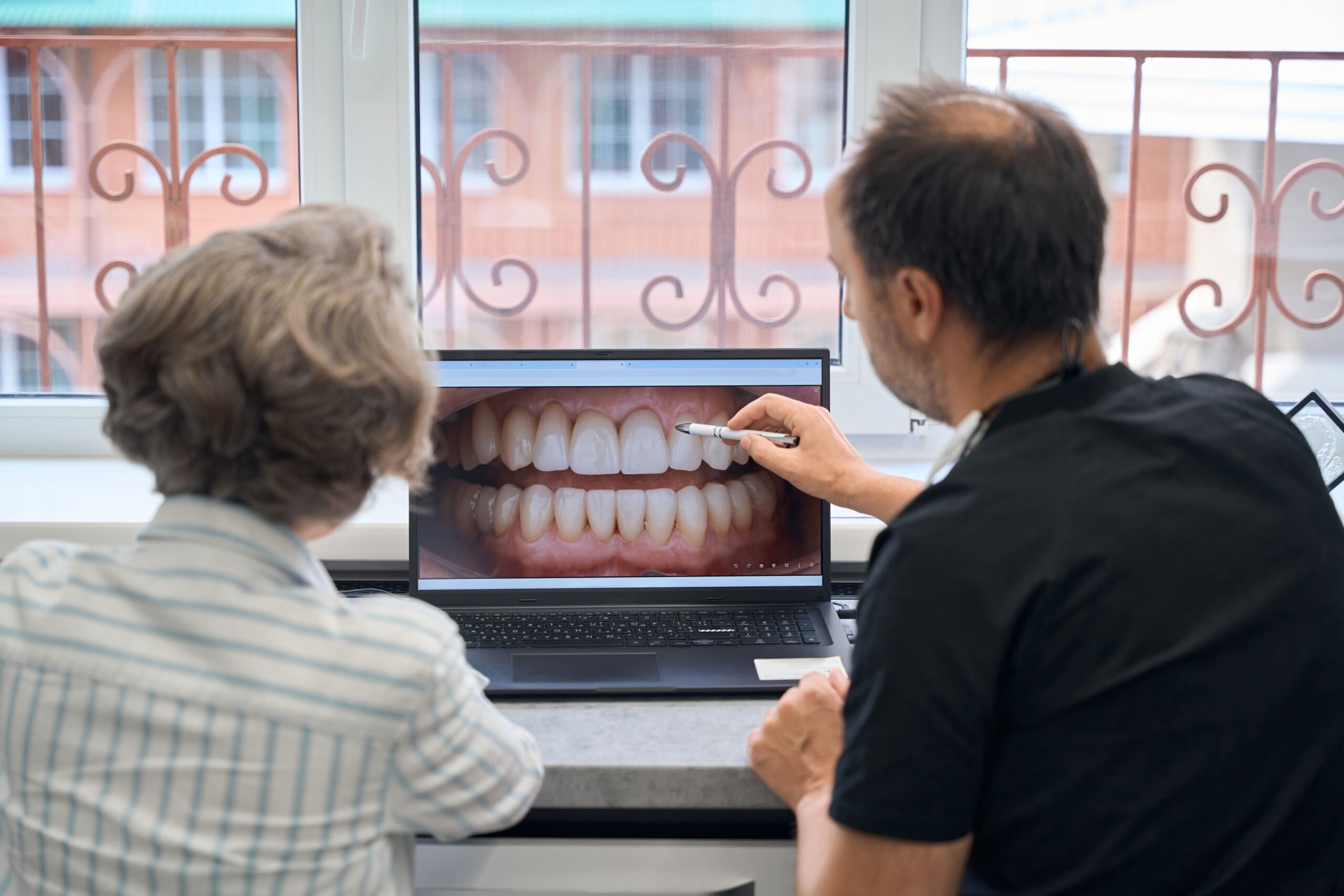
Once the scan is complete, the digital model can be reviewed as part of treatment planning. Digital dentistry can also make it easier for patients to see what their dentist is evaluating.
First Hill Dental Center notes that the 3D model appears on screen in real time and can be used to help patients understand their oral health and treatment options.
The scan may then be incorporated into the appropriate restorative workflow for designing and producing the crown.
Why Use an iTero Scanner Instead of a Traditional Impression?
Traditional impressions have been used successfully in restorative dentistry for many years. However, digital impressions offer a different patient experience.
With iTero Scanner Technology, patients can avoid the impression material traditionally used to create a physical mold. First Hill Dental Center describes digital scanning as a cleaner, more comfortable way to capture information about the teeth.
Potential advantages of digital scanning include:
- Patient comfort: No traditional impression material is needed.
- Immediate visualization: The digital model can be viewed on screen.
- Efficient information capture: First Hill Dental Center states that its digital model creation process can take as little as 60 seconds.
- Digital communication: Digital files can support communication and coordination within restorative workflows.
- Patient understanding: Seeing a 3D representation can make treatment discussions easier to understand.
The American Dental Association notes that intraoral scanners are used for digital impressions for restorations such as crowns, inlays, onlays, fixed partial dentures, and implant surgical guides. It also notes that scanner accuracy can vary depending on the clinical situation and scanning conditions.
Does an iTero Scan Make a Crown More Accurate?
An important distinction is that the scanner is one part of the restorative process.
A high-quality digital scan provides detailed digital information, but the final crown also depends on factors such as tooth preparation, tissue management, bite records, crown design, material selection, manufacturing, and clinical placement.
Research reviewed by the American Dental Association indicates that digital scans can provide clinically acceptable marginal and internal fit for single-unit crowns, while also emphasizing that results vary according to the clinical circumstances and methods used.
In other words, iTero technology can support a precise digital workflow, but it does not eliminate the need for professional clinical judgment.
Can You See Your Crown Scan Immediately?
One of the patient-friendly features of digital scanning is that the 3D model can appear on screen as the scan is being captured.
First Hill Dental Center explains that patients can see the digital model in real time and that the dental team can use it to discuss what they see.
For someone preparing for a crown, this can make an otherwise unfamiliar process easier to understand. You can see the digital representation of your teeth rather than relying only on a physical impression or verbal explanation.
How iTero Scanning Fits Into Long-Term Dental Care
A crown is intended to restore a tooth, but protecting that restoration requires ongoing oral care.
First Hill Dental Center’s approach to long-term dentistry focuses on durable restorative solutions, including crowns, veneers, and other treatments selected according to the patient’s dental needs. The practice also recommends maintaining good oral hygiene and regular dental visits to help monitor restorations.
Digital scans can also be useful beyond a single crown appointment. First Hill Dental Center notes that digital models can help monitor changes in tooth wear, movement, and gingiva over time.
That makes digital dentistry relevant not only when restoring a damaged tooth but also when monitoring oral health over the longer term.
What Should You Expect at a Seattle Dental Appointment?
If you’re visiting First Hill Dental Center in Seattle for restorative care, your appointment begins with an evaluation of your dental needs. If digital scanning is appropriate for your treatment, the iTero scanner can be used to capture a detailed digital model.
The practice is located in Seattle’s First Hill neighborhood at 901 Boren Ave, Suite 1500, and lists crowns, onlays, veneers, and iTero Scanner Technology among its dental services.
Because every crown case is different, your dentist can explain whether digital scanning is appropriate for your particular restoration and how it fits into the overall treatment plan.
The Bottom Line: How to Use an iTero Scanner for Crown Treatment
Understanding how to use an iTero scanner for crown treatment starts with knowing what the technology actually does. The scanner captures digital information about the teeth and mouth, creates a three-dimensional model, and can support the planning and fabrication workflow for a dental crown.
At First Hill Dental Center – Dr. Singh DMD, iTero Scanner Technology is part of a modern approach to dental care designed to make digital imaging more comfortable, efficient, and easier for patients to understand. For patients in Seattle who need a crown, the right next step is a professional evaluation to determine whether a digitally planned restoration is appropriate for their tooth and long-term oral health.
FAQs
1. Can an iTero scanner be used for a dental crown?
Yes. Intraoral scanners can create digital impressions used in restorative dentistry, including dental crowns. The scan becomes part of the digital workflow used to plan and fabricate the restoration.
2. How long does an iTero scan take for a crown?
The exact scanning time depends on the case and scanning workflow. First Hill Dental Center states that its iTero digital model can be created in as little as 60 seconds.
3. Is an iTero scan more comfortable than a traditional dental impression?
For many patients, digital scanning can be more comfortable because it does not require traditional impression materials. First Hill Dental Center specifically describes its iTero process as avoiding powders and impression materials.
4. Does an iTero scan replace the dentist’s examination?
No. The scan provides digital information, but the dentist still needs to evaluate the tooth, surrounding tissues, bite, and overall oral health before recommending a crown or other restoration.
5. Can I see my iTero scan during my appointment?
Yes. First Hill Dental Center explains that the 3D model can appear on screen in real time, allowing the dental team to show patients what they are seeing and discuss treatment options.