

5 Common Causes of Cavities
January 20, 2021
When you schedule your routine family dental care, we know that the last thing you want is a cavity or other dental problem. But cavities can be caused by different things, and sometimes you can’t avoid them. Whether you need a routine cleaning or have a cavity you want filled, make sure you choose a trusted local dentist in Seattle for all your family’s dental care needs. Learn about the common causes of cavities and schedule an appointment at our dental office today!
Understanding the 3 Main Types of Cavities
Not all cavities develop the same way or affect the same parts of your teeth. Dentists generally categorize cavities into three distinct types based on where they form:
-
Pit and Fissure Cavities: These form on the chewing surfaces of your back teeth (molars and premolars). Because these teeth feature deep grooves and crannies that easily trap food particles and plaque, they are the most common site for tooth decay.
-
Smooth Surface Cavities: These develop on the flat, outer exterior surfaces of your teeth. They typically progress more slowly and can often be prevented or reversed early on with proper fluoride use and rigorous daily hygiene.
-
Root Cavities: As we age, gums naturally recede, exposing the soft root surfaces of teeth. Because roots lack the hard, protective outer enamel layer found on crowns, they are exceptionally vulnerable to bacteria and decay.
What Causes Cavities?
Cavities happen when the acids from the plaque in your mouth dissolve and eat through the enamel on your teeth. This tooth decay creates holes in your teeth called cavities. Small or moderately sized cavities are able to be filled once properly cleaned up. But if cavities go unnoticed and the tooth decays too deeply, then it becomes too late to just fill that cavity.
But how do you get enough plaque in your mouth to cause cavities in the first place? There are different foods that can cause cavities, in addition to other problems. In today’s post, we’ll discuss five common causes. But if you’re worried about your own dental hygiene, make sure to ask your dentist!
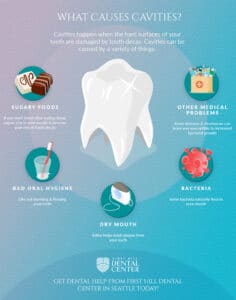
Sugar
Sugary foods and drinks put you and your teeth at risk of cavities. The sugar in those foods exists with the bacteria in your mouth to produce an acid. This acid is what eats the enamel of your teeth, causing tooth decay. To help prevent this from happening, make sure you brush your teeth and floss after consuming food or drink with sugar.
Lack of Oral Hygiene
Are you brushing and flossing at least twice a day? What about after meals? After you eat, small pieces of food can get stuck between your teeth and put your teeth at risk of cavities. Proper oral hygiene helps keep your teeth clean and reduces your chances of developing cavities in the future.
Dry Mouth
The presence of saliva in your mouth works to clean your teeth and help remove plaque. But if you suffer from dry mouth, then the plaque and bacteria in your mouth can build up quickly. If you know that you’re at risk for dry mouth, talk with your dentist about ways to keep your mouth healthy.
Bacteria
There is certain bacteria that naturally lives in your mouth and on your teeth. As you’ve already heard, that bacteria can interact with the food you eat, forming cavities. One way to help fight the bacteria that lives in your mouth is to practice proper hygiene!
Medical Problems
There are certain medical problems that can put you at an increased risk of developing cavities. Diabetes, oral cancer, acid reflux and treatments for other diseases can weaken your enamel and increase your risk of tooth decay. If you have a medical condition you’re concerned about, talk with your dentist about the best way to care for your teeth.
Advanced Risk Factors: Why Some People Get More Cavities
While poor oral hygiene and sugar are the primary drivers of decay, several secondary risk factors can dramatically increase your vulnerability:
-
Frequent Snacking and Constant Sipping: Sipping on acidic beverages (like soda, sports drinks, or sweetened coffee) throughout the day creates a continuous “acid bath” for your teeth, giving your saliva no time to neutralize the pH levels.
-
Lack of Fluoride Exposure: Fluoride is a naturally occurring mineral that hardens tooth enamel and can even reverse microscopic, early-stage decay. Drinking exclusively non-fluoridated bottled water without using a fluoride toothpaste deprives your teeth of this vital defense.
-
Worn Dental Fillings or Appliances: Older fillings can weaken, fracture, or develop rough edges over time, creating hidden micro-gaps where stubborn plaque can accumulate completely out of reach of your toothbrush.
Schedule Family Dental Care Today
We hope that this post helps you better understand what cavities are — and ways you can prevent them from happening in the first place. If you have a cavity that needs to be filled, schedule an appointment at First Hill Dental Center – Dr. Singh DMD today!
FAQs
-
What is the main cause of cavities?
The main cause of cavities is plaque buildup on teeth. When bacteria in plaque combine with sugars from food and drinks, they produce acids that gradually damage tooth enamel. -
Can eating sugary foods really cause cavities?
Yes. Frequent consumption of sugary foods and beverages feeds harmful bacteria in the mouth, increasing acid production and raising the risk of tooth decay. -
How can I prevent cavities from forming?
You can prevent cavities by brushing twice a day with fluoride toothpaste, flossing daily, limiting sugary snacks, and visiting your dentist regularly for checkups and cleanings. -
Are cavities common in adults as well as children?
Yes. While cavities are often associated with children, adults can develop them too, especially if they have gum recession, dry mouth, or poor oral hygiene habits. -
What are the early signs of a cavity?
Early signs may include tooth sensitivity, mild toothache, white or dark spots on the tooth surface, and pain when eating sweet, hot, or cold foods.