
Should I Get a Root Canal or Have the Tooth Pulled?
November 5, 2026
A damaged or infected tooth does not always need to be removed. In many cases, root canal treatment can eliminate infection while preserving the natural tooth. However, when decay, fractures, or gum disease have destroyed too much supporting structure, extraction may be necessary. Patients considering root canal vs extraction should first understand whether their tooth can be restored. A dental evaluation at First Hill Dental Center’s oral surgery service can help determine the appropriate treatment in Seattle.
What Is the Difference Between a Root Canal and a Tooth Extraction?
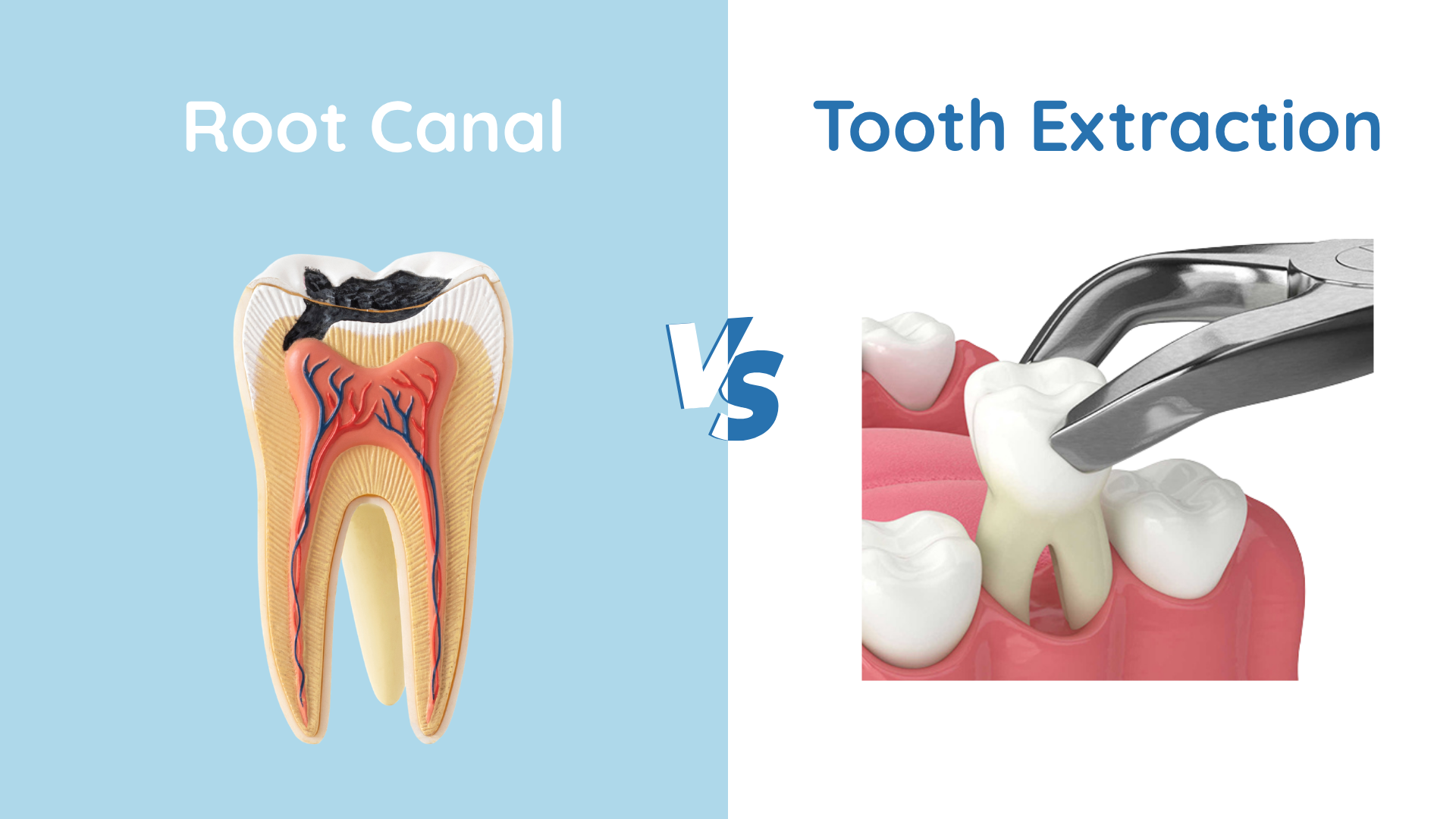
A root canal removes infected tissue from inside a tooth, while an extraction removes the entire tooth from its socket. The main difference is whether the natural tooth can remain functional after treatment.
A root canal, also called endodontic treatment, addresses infection in the dental pulp. The pulp contains nerves, blood vessels, and connective tissue. Deep decay, repeated dental procedures, cracks, and dental trauma can damage this tissue.
During treatment, the dentist removes the infected pulp, cleans and disinfects the root canals, and seals the internal space with a material called gutta-percha. A filling or dental crown then restores and protects the tooth.
A tooth extraction removes the damaged tooth completely. Depending on the condition, the dentist may recommend a simple extraction or a surgical extraction. After removal, a dental implant, fixed bridge, or removable partial denture may be considered to replace the missing tooth.
The American Association of Endodontists (AAE) identifies preserving the natural tooth as an important treatment goal whenever restoration is clinically possible.
When Should You Choose a Root Canal Instead of Extraction?
Root canal treatment is generally preferred when the tooth has infected pulp but enough healthy structure remains to support a lasting restoration.
A dentist evaluates the tooth’s condition before recommending endodontic treatment. The presence of pain or infection alone does not mean extraction is necessary.
A root canal may be appropriate when:
-
Deep tooth decay has reached the pulp, but the remaining tooth structure can support a restoration.
-
A cracked or chipped tooth has damaged the pulp without making the tooth unrestorable.
-
An existing filling or crown has contributed to repeated pulp inflammation.
-
A dental abscess has developed around a tooth that can still be treated and restored.
-
The tooth has sufficient periodontal support to remain stable after treatment.
Preserving the natural tooth maintains its original position and chewing function. It also avoids immediately creating a gap that may require replacement.
After root canal treatment, a crown is often recommended for a heavily damaged tooth, particularly a molar. The need for a crown depends on the remaining structure and the tooth’s location.
For additional information about treatment concerns, read First Hill Dental Center’s article on whether root canals cause health problems.
When Is Tooth Extraction the Better Treatment?
Extraction is appropriate when the tooth cannot be predictably restored or when its supporting structures are too damaged to maintain it.
Although preserving natural teeth is generally preferred, root canal treatment cannot correct every type of dental damage.
A dentist may recommend removal when:
-
A vertical root fracture extends through the tooth and makes restoration unpredictable.
-
Extensive decay extends below the gumline and leaves insufficient healthy structure.
-
Severe periodontal disease has caused substantial supporting bone loss and tooth mobility.
-
The tooth has extensive structural damage that cannot support a crown or other restoration.
-
Previous treatment has failed and further tooth-saving procedures are not clinically appropriate.
An extraction may also be necessary when infection cannot be controlled through appropriate tooth-preserving treatment.
The AAE explains that some teeth cannot be saved even with advanced endodontic procedures. In these situations, the dentist should discuss replacement options and the consequences of leaving the space untreated.
How Do Root Canal Treatment and Extraction Compare?
Root canal treatment preserves the original tooth, while extraction removes it and may create a need for replacement treatment.
The following comparison explains the main differences between these procedures.
| Treatment factor | Root canal | Tooth extraction |
|---|---|---|
| Main purpose | Remove infected pulp and preserve the tooth | Remove the damaged tooth |
| Natural tooth | Retained | Removed |
| Anesthesia | Local anesthesia is commonly used | Local anesthesia is commonly used |
| Appointments | Often one or two visits | Depends on extraction complexity |
| Restoration | Filling or crown when indicated | Implant, bridge, or partial denture when indicated |
| Recovery | Temporary tenderness may occur | Healing of the extraction site is required |
| Long-term function | Retains the natural tooth | Depends on whether and how the gap is replaced |
The final treatment plan depends on the tooth’s location, infection severity, remaining structure, and overall oral health.
Is a Root Canal More Expensive Than Having a Tooth Pulled?
The total cost depends on the procedure, restoration, and any replacement treatment required after extraction.
An extraction may initially have a lower treatment fee than a root canal. However, the financial comparison changes when the missing tooth needs replacement.
Consider the following potential expenses:
-
Root canal treatment and a protective dental crown.
-
Tooth extraction and a dental implant with a restoration.
-
Tooth extraction and a fixed dental bridge.
-
Tooth extraction and a removable partial denture.
A dental implant may also require additional procedures, such as bone grafting, when there is insufficient supporting bone.
Insurance coverage varies by plan. Some policies cover root canal treatment, extraction, or replacement procedures at different benefit levels.
Before choosing either treatment, request a written estimate that includes the procedure, restoration, follow-up appointments, and applicable insurance benefits. The lowest initial fee does not necessarily represent the lowest overall treatment cost.
What Happens If You Extract a Tooth and Do Not Replace It?
Leaving an extracted tooth unreplaced can affect chewing, tooth alignment, and the supporting structures around the missing tooth.
The effects depend on the location of the missing tooth and the condition of the surrounding teeth.
Potential consequences include:
-
Tooth movement: Adjacent teeth may gradually shift toward the empty space.
-
Opposing tooth movement: The tooth in the opposite jaw may move into the space.
-
Changes in chewing: Missing teeth can affect how biting forces are distributed.
-
Bone changes: The jawbone in the extraction area can gradually lose volume because it no longer receives normal stimulation from the tooth root.
A dentist may discuss a dental implant, fixed bridge, or removable partial denture to restore the missing tooth. The appropriate option depends on bone health, neighboring teeth, bite alignment, and individual treatment needs.
How Can a Dentist Determine Which Treatment You Need?
A clinical examination and dental X-rays help determine whether the tooth can be saved or needs extraction.
The dentist considers several clinical findings before making a recommendation:
-
Pulp condition: Tests help assess whether the dental pulp is healthy, inflamed, or infected.
-
Tooth structure: The dentist checks for deep decay, fractures, and sufficient remaining tooth material.
-
Root condition: X-rays help identify root damage and infection around the root tip.
-
Gum and bone support: Periodontal examination helps assess whether the tooth is stable.
-
Restoration requirements: The dentist determines whether a filling or crown can predictably restore the tooth.
If the diagnosis is complex, a referral to an endodontist may be appropriate. An endodontist has additional specialist training in diagnosing and treating diseases of the dental pulp and surrounding tissues.
Patients experiencing facial swelling, fever, spreading infection, or difficulty swallowing should seek urgent medical or dental assessment. Do not delay care while deciding between treatment options.
Where Can You Get an Evaluation for Root Canal vs Extraction in Seattle?
A dental examination is the first step toward deciding whether root canal treatment or extraction is appropriate.
At First Hill Dental Center – Dr. Singh DMD, patients in Seattle can discuss their dental concerns and available treatment options with the dental team. The evaluation can help identify the cause of tooth pain, assess the remaining tooth structure, and determine whether further endodontic care or extraction is needed.
If your tooth is restorable, preserving it may avoid the additional treatment required to replace a missing tooth. If extraction is necessary, discuss the appropriate replacement plan before proceeding.
To arrange an evaluation, contact First Hill Dental Center .
You can also find the practice, location, and directions through its Google Business Profile on Google Maps.
FAQs
Is it better to get a root canal or have a tooth pulled?
A root canal is generally preferred when the tooth can be restored because it preserves natural tooth structure and chewing function.
Can an infected tooth heal without a root canal?
An infected dental pulp generally cannot heal on its own and may require root canal treatment or extraction.
Does a root canal hurt more than an extraction?
Both procedures use local anesthesia, and post-treatment discomfort varies according to the procedure and individual condition.
Can I get a dental implant after tooth extraction?
Yes, a dental implant may replace an extracted tooth if there is sufficient bone support and the patient meets the clinical requirements.
How long does a root canal-treated tooth last?
A properly treated and restored tooth can last many years, and some root canal-treated teeth last a lifetime with appropriate care.